
Airbnb started by renting out their own apartment. Dropbox? A video demo. Twitter (aka “twttr”)? Literally just short messaging. Facebook? Only for Harvard students. ALL were MVPs that grew by listening, learning, building, and iterating.

Menu
Minimum Viable Product (MVP) Development
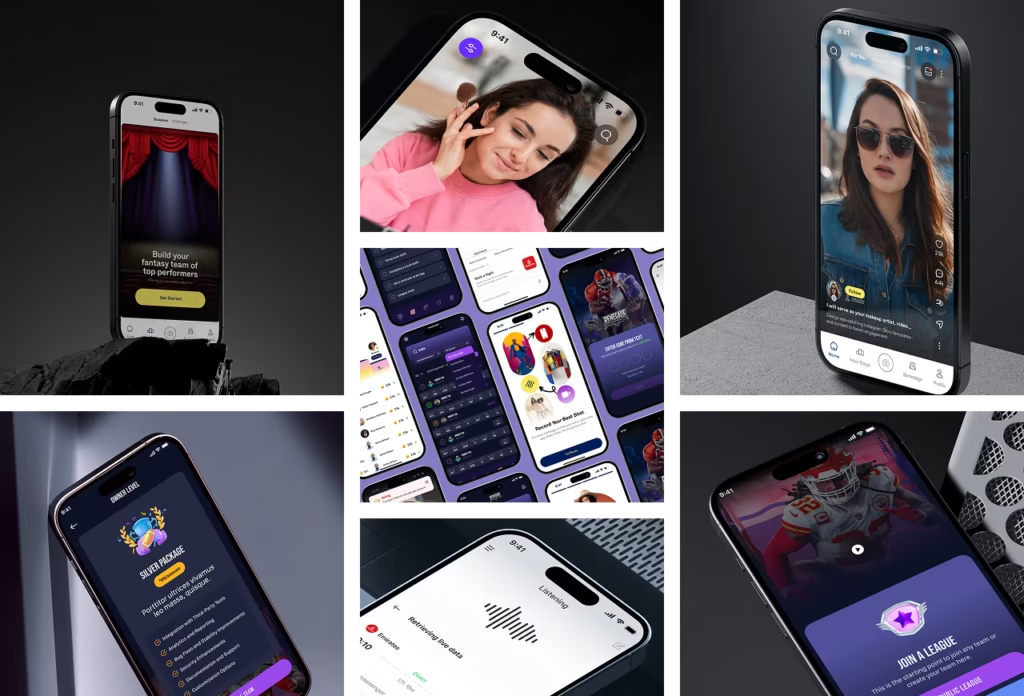
MVP Mindset

What Is Launch Smarter, Not Harder: Your Complete MVP Service for Modern Innovators, Anyway?
Picture this. You’ve finally hatched a startup idea that keeps you awake at night (in the good way). Maybe you’re a serial entrepreneur who’s seen a few launches fizzle, or maybe this is your very first big leap. Either way, you know one thing for certain: you do not want to spend months (or mortgage-level dollars) building a complete product that misses the mark with real customers.
Cue the concept of the Minimum Viable Product (MVP). It’s not just another startup buzzword people toss around like “blockchain” at tech meetups. The MVP approach is based on something beautifully simple (yet brilliantly effective): build just enough of your product to start learning immediately from real, live humans. Not your cousin, not your co-founder (unless they double as your first user), but real customers who will actually use the product. The goal? Validate their product interest, collect the maximum amount of validated learning, and avoid the heartbreak (and expense) of shipping a product that fails to meet market needs.
If you’re a startup, entrepreneur, research team, or even a battle-tested product manager looking for an MVP development company that “gets it,” keep reading. We’re about to break down all things MVP with clarity, honesty, and a dash of cheeky encouragement.
Viable Clarity

What is a Minimum Viable Product, Anyway?
No trickery here. An MVP is the simplest version of a product that solves one burning customer problem and delivers actual, testable value. Not a prototype. Not a rough wireframe. Not a half-baked demo collecting dust in your Google Drive. We’re talking about a working product that allows a team to collect real, actionable feedback with minimum upfront hassle
Eric Ries (yes, the Lean Startup Eric Ries) said it best:
“The minimum viable product is that version of a new product which allows a team to collect the maximum amount of validated learning about customers with the least effort.”
The purpose of an MVP isn’t to wow with visual polish. It’s to see if your core idea flies before you go all-in building a fully functional product. Whether you’re aiming for an app that makes getting a taxi as easy as tapping a button (Uber, anyone?) or validating the concept of the MVP in a totally new industry, you start with just enough functionality to get real users poking, prodding, and sharing feedback.
Pro Tips
Quick analogy time! If your complete product is like hosting a 10-course banquet, then:
Prototype = showing a photo of your proposed menu.
Beta = inviting your friends for a soft opening and asking for Yelp-style feedback.
MVP = serving one killer dish to total strangers and seeing if they want more.
ALL MVPs hinge on one goal: get your product in front of actual users early in the product development process to validate those “million-dollar” ideas before pouring in your life savings.
Why MVP
Why Should You Develop an MVP?
Still on the fence about going MVP? Here’s the scoop (and yes, it’s ALL about saving your sanity, wallet, and precious time):
Faster Time-to-Market: Launch your product with just enough features to start learning.
Validated Learning: Nothing beats real, unfiltered customer feedback. MVPs give you the goods.
Cost-Effective: Why drop $100k (or more) fully developing the product when a scrappier version does the job?
Risk Reduction: MVPs help you bail early on ideas that won’t fly. No shame in pivoting!
Iterative Development: Build, measure, learn, repeat. Iterative development is at the heart of the MVP approach.
Early Investor Buy-In: Attract those elusive early investors by showing that people will actually use the product.
Market Validation: Real users, real feedback. Validate their product experience before the big launch.
Real-World MVP Win Stories:
MVP Benefits
The Key Benefits of MVP Development
Reduced Financial Costs
Forget building every last feature. MVPs keep your burn rate lean.
Low-risk Testing
MVP allows you to test, measure, and validate a product idea with minimal risk. It’s safer than betting on your gut.
Faster Time to Market
Because you’re focusing on one core value, you can launch a product before your competitors even get their coffee.
Early Investor Interest
If your MVP gets traction, those pitch meetings hit different. Show, don’t just tell.
Data-Driven Decision Making
The MVP isn’t about guesswork. It’s about data, feedback, and making smarter moves with every product iteration.
Improved Product-Market Fit
The entire point of the MVP is to meet an actual customer need, not just your wishlist.
Common Mistakes
MVPs Gone Right (& Sometimes Wrong): Common Mistakes to Dodge
Overbuilding (a.k.a. feature creep).
“Build half a product, not a half-assed product.”
– Jason Fried
Ignoring customer feedback (ouch).
Getting lost in the aesthetics when you should be focusing on functionality.
Picking the wrong technology “because it’s hot right now.”
Skipping MVP marketing and messaging.
MVP Analytics
Measuring MVP Success (Yes, the Numbers Matter)
After launching an MVP, here are the metrics we help you track:
User engagement rates: Are people actually using the product?
Customer acquisition cost (CAC)
Churn rate
Net Promoter Score (NPS)
Retention rates
Volume and sentiment of feedback
Remember, MVP isn’t the endpoint, it’s the launchpad for ALL future product greatness.
Next Step
After the MVP: What Comes Next?
Analyze your feedback.
Iterate, then iterate again.
Gradually scale those feature sets based on actual user demand.
Get ready for version 2.0 (no, it’s never “done”).
Use MVP traction to prep for funding rounds.
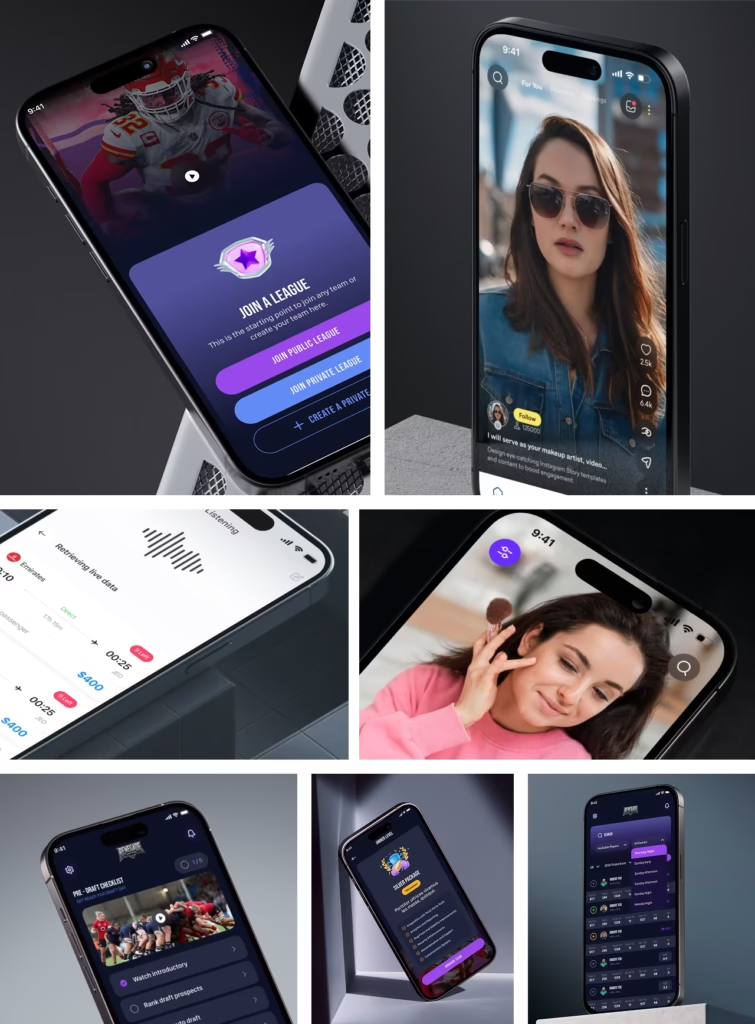
MVP Mindset
You Next Steps
Are you ready to launch smarter, validate faster, and save ALL the headaches (and dollars) that come from building a product without proof? Whether you’re new to the concept of the minimum viable product or you’ve launched an MVP before and want to do it better this time, our team brings ALL the expertise (and the coffee) to turn your idea into a marketable product that actually sells.
Get a Free MVP Consultation
Discover how you can launch your MVP fast, for less, and with WAY less risk.
Book your free consultation with our MVP experts (no sales fluff, just honest advice).
ALL great products start here with a minimum viable product that allows you to learn, adapt, and win in a crowded world. Let’s make your new product the next MVP success story.
Get a Free MVP Consultation
Focus on your core user problem
Build a minimum viable product, not a “bare minimum” prototype
Release, collect, learn, iterate
Keep ALL communication honest (with yourself, your team, and your early users)
“If you’re not embarrassed by the first version, you’ve launched too late.”
– Reid Hoffman, LinkedIn Founder
Your MVP isn’t just a product. It’s your ticket to all the right lessons, ALL the customers you want to reach, and a product vision with the power to grow.
Intuitive, data-driven
platforms thst empower users and drive smarter
decisions.
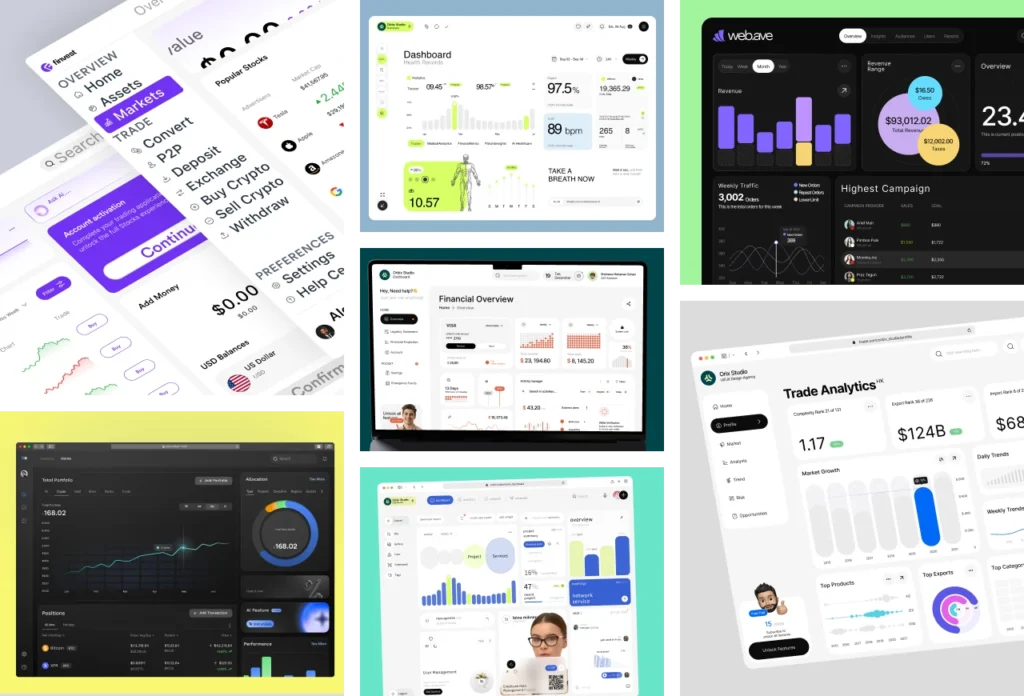
From admin systems and analytics dashboards to full SaaS platforms, we design and develop tools that feel effortless, perform reliably, and scale with your business.
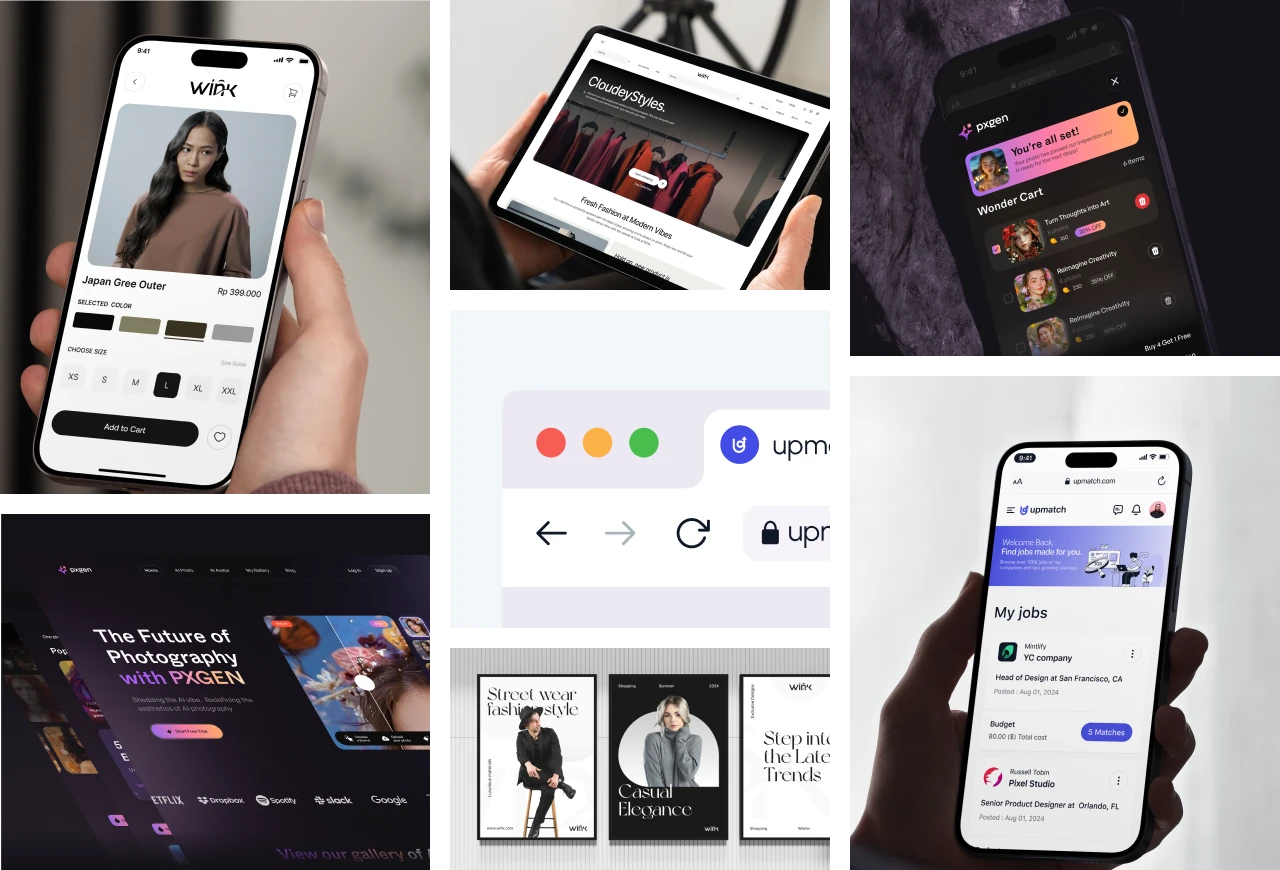
SAAS Essentials
Powerful platforms, Simplified
At Centmore, we help teams transform complex data and workflows into dashboards and SaaS products that are clear, usable, and efficient. Whether you need a customer portal, performance dashboard, or subscription platform, we craft solutions that match your users’ expectations and business goals.
With thoughtful UX, strong engineering, and scalable architecture, your product will be prepared for growth from day one.
Why a great dashboard or
saas
product matters
- Deliver real insights: Convert raw data into clear, actionable visualizations.
- Boost team productivity: Streamline workflows with intelligent, intuitive interfaces.
- Scale with confidence: Architecture designed to grow as your user base increases.
- Improve user trust: Transparent and predictable UI builds credibility.
What We Do
Our dashboard & saas capabilities

Admin Dashboards
Real-time data, user management, and performance overview for teams.

Analytics & Reporting Tools
Interactive charts, insights, and custom reporting modules.

SaaS Platforms
Subscription-based products with secure authentication and billing.

Client Portals
Personalized dashboards with access control and secure data.

Integrations & APIs
Connect with third-party services, CRMs, and data sources.

Notifications & Alerts
Keep users informed with smart alerts and updates.
What We Do
Our dashboard & saas capabilities

Discovery & Strategy:
Understand users, business goals, and data flows.

Analytics & Reporting Tools
Interactive charts, insights, and custom reporting modules.

SaaS Platforms
Subscription-based products with secure authentication and billing.

Client Portals
Personalized dashboards with access control and secure data.

Integrations & APIs
Connect with third-party services, CRMs, and data sources.

Notifications & Alerts
Keep users informed with smart alerts and updates.
What You’ll Get
What you can expect
0
%
Increase in organic traffic
0
%
Improvement
in conversion rates
0
%
Higher engagement across marketing channels
-
%
Lower cost per acquisition through optimization
Frequently Asked
Questions
However, we recommend reaching out to us if you have any questions.
Have a question about pricing?
Is a custom SaaS admin dashboard right for my business?
If your business is running on manual processes, stuck in “Excel hell,” or hacking together pre-built tools that never quite fit, then yes. Custom SaaS delivers the admin panel tailored for your specific needs, streamlining every workflow.
Can I migrate my sensitive information from legacy systems?
Absolutely. The right development team ensures full compatibility, secure authentication (SSO), and seamless integration with your current stack (including CRM, analytics, and other management software).
What about scalability?
Custom SaaS apps are designed to scale as you grow, users, data, features, and automation all expand painlessly. Your subscription model and dashboard performance keep up, not bog down.
Centmore We’re More
than an Agency
From product strategy and UI/UX design to development
and marketing, we create digital experiences that are
intuitive, scalable, and business-ready.
SaaS Advantage
2 Why Custom SaaS Solutions are Your Secret Growth Weapon
With the number of cloud-based business apps exploding across industries, there’s never been a better time to ditch those clunky spreadsheets and static legacy software. Whether you’re looking for a user-friendly web application, a powerful CRM, or a fully-decked-out admin dashboard template, custom SaaS solutions give you full control and compatibility with your unique needs. No more settling for almost right. This is software carved to your blueprint.
“SaaS is not just a software delivery model, it’s a strategic enabler for digital transformation.”
– Satya Nadella, CEO of Microsoft
Your SaaS, Your Rules
What Exactly Is a Custom SaaS Solution? (And Why Not Just Buy Off-the-Shelf?)
SaaS (Software as a Service) lets you access management software through the glorious magic of the cloud. Updates roll in, features grow, and your tech stack becomes a lean, collaborative, future-proof machine.
But here’s the rub: off-the-shelf SaaS can feel like living in a rental. Sure, it’s functional, but try knocking down a wall or adding a secret room. Custom SaaS solutions are your dream house, blueprints and all.
Advantages of going custom?
Scalable (grow at the speed of your ambitions)
Tailored functionality (your features, your way)
Enhanced security features (protect sensitive information)
Cost-effective over time (pay for what you actually use)
Seamless compatibility with your entire tech stack
Compliance requirements built for your industry
“Custom SaaS solutions provide businesses with the flexibility to adapt and innovate, unlike traditional off-the-shelf software.”
– Marc Benioff, CEO of Salesforce
Pro Tips
Quick analogy time! If your complete product is like hosting a 10-course banquet, then:
Prototype = showing a photo of your proposed menu.
Beta = inviting your friends for a soft opening and asking for Yelp-style feedback.
MVP = serving one killer dish to total strangers and seeing if they want more.
ALL MVPs hinge on one goal: get your product in front of actual users early in the product development process to validate those “million-dollar” ideas before pouring in your life savings.
Custom Gains
Benefits of Investing in Custom SaaS Apps
Today’s SaaS world isn’t one-size-fits-all. Custom SaaS apps deliver:
Flexibility for your specific business needs (no more “almost works” hacks)
Delightful user experience and visually appealing user interface (UI) your team will actually love using
Faster integration with your existing project management or other systems (through robust API support)
Unique, tailored workflows and customizable dashboards that actually reflect your operations
Cost efficiency and future-proofing (never outgrow your solution)
Compliance with industry standards in security and authentication (SSO anyone?)
“The ability to customize your SaaS applications is key to achieving true business agility and customer-centricity.”
– Dion Hinchcliffe, VP, Constellation Research
Real-World MVP Win Stories:
Airbnb started by renting out their own apartment. Dropbox? A video demo. Twitter (aka “twttr”)? Literally just short messaging. Facebook? Only for Harvard students. ALL were MVPs that grew by listening, learning, building, and iterating.
SaaS Revolution
SaaS Apps Powering the “New Business Era”
Here’s where it gets juicy. SaaS applications run the gamut from seamless CRM engines to AI-powered analytics dashboards. Popular types include:
Collaboration and productivity tools
Enable teamwork across internal and external teams.
E-commerce SaaS solutions
Customer service platforms
Keep your customers happy, loyal, & engaged.
Niche industry apps
Healthcare, FinTech, education, whatever-vertical-you’re-dreaming-of.
Advantages of going custom?
Cloud hosting for access across devices (laptop in the office, smartphone on the go)
Multi-device compatibility (it just works, everywhere)
Intuitive UI/UX (nobody reads the manual)
Robust API and effortless integration (your app, your rules)
Bulletproof security and permission controls (SSO, authentication, data encryption)
Pre-built templates for rapid deployment and experimentation
Sneak peek at success:
Case Study: Startup Z consolidated four fragmented tools into a single, centralized admin dashboard, cut reporting time by 68%, and scaled seamlessly when user growth skyrocketed.
Case Study: FinTech Co. replaced a patchwork CRM with a custom SaaS app, routing sensitive customer data securely, and automation that audited compliance in real time.
The future of business apps is SaaS-driven: scalable, user-focused, and integrated seamlessly into everyday workflows.
– Aaron Levie, CEO of Box
Keep your customers happy, loyal, & engaged.
CRM Core
CRM Systems – The Beating Heart of Customer-Centric SaaS
A SaaS CRM isn’t just a digital address book. It’s a tactical cockpit giving you centralized data access to every customer engagement, automating repetitive admin, and giving you the big (and small!) picture on every deal.
Why Custom CRM?
Streamlined workflow and pipeline management
Customizable sales automation and lead scoring
Insightful reporting and real-time analytics dashboards
SSO, secure authentication, and strict permission management
“Customer relationship management is not just a tool, it’s the heart of your business strategy in the SaaS era.”
– Brian Halligan, Co-founder of HubSpot
The result? Optimized sales, improved retention, and a single source of truth for both your internal and external teams.
Admin Power
Admin Dashboards The Brain of Smart Operations
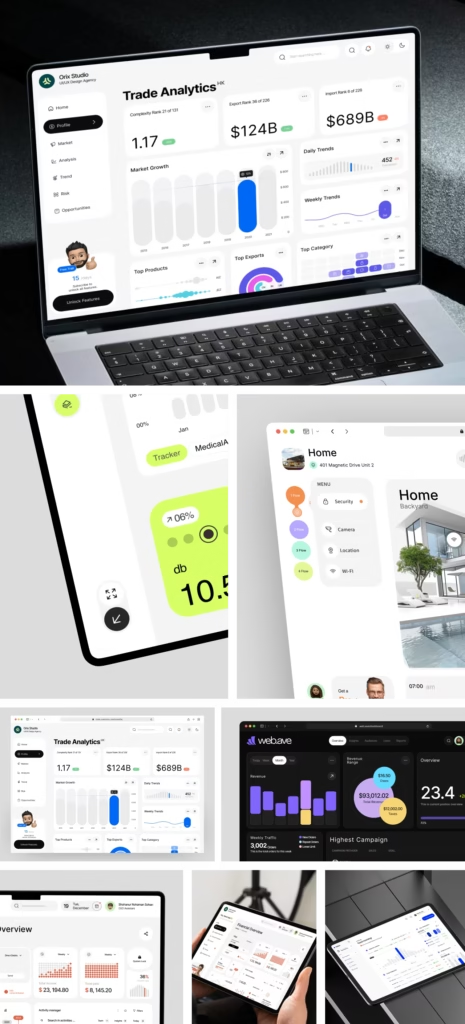
An admin dashboard is your business’s command center, a smart, visually appealing console that puts you (admins, managers, or execs) in full control of everything from churn rate to sales velocity.
Key Features:
Real-time data visualization (metrics at a glance)
System performance and workflow monitoring
Role-based user management and audit trails
Custom, cloud-based reporting across industrie
Alerts and notifications (never be surprised again)
Template libraries for quick, stylish setup
UI/UX best practices mean dashboards are not just powerful, but delightful to use. Your admins won’t just tolerate them; they’ll crave their morning metric check-in.
“Effective admin dashboards turn complex business operations into simple, data-driven actions.”
– Thomas Kurian, CEO of Google Cloud
Build Journey
From Idea to Deployment (The Custom Development Journey)
Discovery & Requirement Gathering
Define business needs, ask the big questions, dream big.
Wireframing & Prototyping
Sketch layouts, try UI ideas, collect feedback.
Custom Development & Integration
Because you’re focusing on one core value, you can launch a product before your competitors even get their coffee.
Testing & Iteration
QA audits, usability tweaks, and constant feedback.
Deployment & Cloud Hosting
Launch smoothly; deploy updates with zero friction.
Ongoing Support
New features, continuous security, compliance upgrades, you name it.
SMART TRENDS
What’s Next? Future SaaS Trends to Watch
AI-powered recommendations, fraud detection, and chatbots
No-code & low-code customization for rapid deployment
Hyper-personalization in CRM and user experience
Security features that go above and beyond
Predictive, real-time analytics dashboards
Mobile-first and micro-SaaS products
“AI, no-code tools, and predictive analytics are not trends, they are the future foundation of all successful SaaS platforms.”
– Melinda Emerson, SaaS Consultant
FAQS
Some Common Questions That You May Want to Ask
Is a custom SaaS admin dashboard right for my business?
If your business is running on manual processes, stuck in “Excel hell,” or hacking together pre-built tools that never quite fit, then yes. Custom SaaS delivers the admin panel tailored for your specific needs, streamlining every workflow.
Can I migrate my sensitive information from legacy systems?
Absolutely. The right development team ensures full compatibility, secure authentication (SSO), and seamless integration with your current stack (including CRM, analytics, and other management software).
What about scalability?
Custom SaaS apps are designed to scale as you grow, users, data, features, and automation all expand painlessly. Your subscription model and dashboard performance keep up, not bog down.
Final Thoughts (and the Nudge You Needed)
Custom SaaS solutions aren’t about more tools. They’re about more freedom, full control, and sharper, smarter business decisions.
The dashboard, SaaS app, CRM, and admin panel of your dreams? They’re just one conversation away.
Get ready for a seamless user experience that’ll have your users saying, “Wait, it was that easy?”
“AI, no-code tools, and predictive analytics are not trends, they are the future foundation of all successful SaaS platforms.”
– Melinda Emerson, SaaS Consultant